
Bringing home a new dog will fill your house with the fun and love that only a canine pal can provide. Unfortunately, an untrained dog can put a serious damper on that joy. When your dog is out of control, pet ownership turns into a constant headache.
A disobedient, destructive dog is every owner's worst nightmare. Picture your couch cushions ripped, your flooring torn up and your walls scratched. Dog hair is everywhere it's not supposed to be, and constant barking interrupts your favorite shows.
When your dog constantly misbehaves, your friends no longer want to come over for fear that your dog will jump up on them, and your neighbors constantly yell about your pup getting into their yards. For the sake of your relationships--and your own sanity--you have to get your dog under control.
The good news is that every dog can be a well-trained, obedient pooch. No puppy was born knowing what it would take to obey. Rather, they grew into well-behaved dogs because someone invested the time to help them get that way.
With the same sort of time investment, your dog can be the best pup on the block. Teaching obedience is a process, but the following dog training tips will get you started. Before you know it, your friends will be asking you how to train a dog.

Keep stress at bay with positive words.
How you talk about training can make all the difference in your attitude, however. Resolve to speak positively to and about your dog. Not only will you as the trainer benefit from this resolution, but your dog will pick up on your low-stress attitude, too.
Fit training into your life with short sessions throughout the day.
Instead, do your training in short snippets each and every day. By keeping your sessions short, you'll take advantage of when your dog is most alert and ready to learn, rather than wasting your time trying to force your dog to train when he's no longer up for it. Plus, short sessions are easier to fit into a busy schedule.
Related: How to Potty Train a Puppy
Prepare your dog to respond by teaching him his name.
Animal behavior consultant Sherry Woodard recommends using plenty of treats when you are teaching your dog to respond to her name. Call her name just once in a happy voice; then, give her a treat and some good attention when she responds. Repeat this quick game again and again.
Teach your dog to come, since you'll use this command regularly.
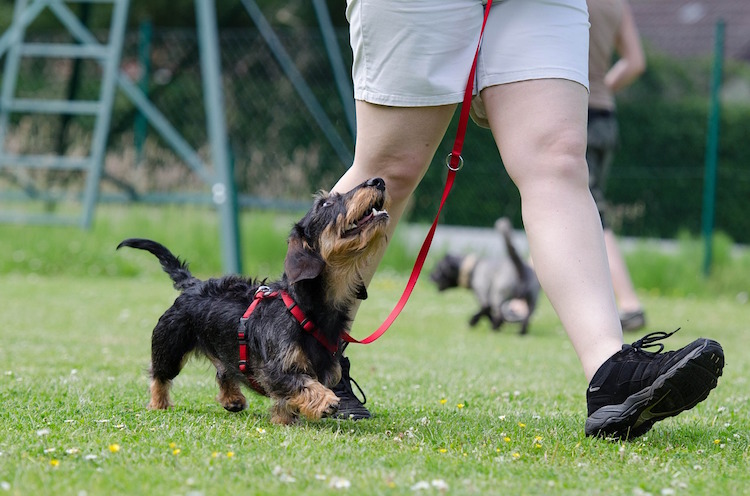
Having a dog who comes right away when called is so much easier. The Humane Society recommends a game to teach this skill. Put your dog on a leash, say, "Come!" and then back up until your dog catches up to you. When she arrives, give her a reward and enthusiastically exclaim, "Yes!"
Get your family on board, so everyone is working together.
A family meeting to outline the behaviors that you expect from your dog is a good start. Then, make the training a group effort, in which everyone encourages good actions and corrects misbehavior. Everybody should use the same words and signals to communicate with the dog.
Issue specific commands that communicate what you want.
Specific words will let your dog know exactly what you expect. Dog expert Cesar Millan recommends teaching your dog to respond to "sit," "come," "down," "stay" and "leave it."
Use these words more often than the less specific "no," which your dog might find open to interpretation. These specific commands let your pup know exactly what behavior your expect.
Related: What are the 50 most popular dogs in America?
Encourage good behavior by giving positive attention.
Conversely, pay less attention to negative behavior. Sometimes disobedience must be addressed, but downplay the amount of reaction your pup gets from you when he does something wrong. He will learn to associate good behavior with your affection.
Figure out what your dog likes, so you can reward accordingly.
Get to know your dog and his desires. It's good for your relationship and will also make training easier. Some dogs love treats; others prefer a loving pat or a toy.
Follow through, so your dog knows that you mean what you say.
Don't let her nudging, barking or whining encourage you to slack off. If you give in just because she's being a nuisance, she'll learn that that's all it takes to get her own way.
Respond to your dog's behavior right away, so it's fresh in his mind.
According to Canidae, a dog's short term memory is only about five minutes long. If you wait to discipline your dog for an infraction, he probably won't remember what he did. This makes the discipline not only unfair but also ineffective.
Show respect to your dog by paying attention to his signals.
Modern Dog Magazine describes a dog with upright ears, an open mouth and a down tail as relaxed and ready to be approached. For more information on canine body language, watch Doggy Dan's video on the topic.
Offer chew toys as an outlet for your dog's need to bite.
The American Society for the Prevention of Cruelty to Animals advises maintain your dog's interest in these items by rotating them out regularly.
Set limits that can grow as your dog matures.
As your dog becomes more comfortable in your home and has demonstrated trustworthy behavior, open up more of your home to her.
Give your dog the appropriate amount of energy with the right food.
According to Lisa Hanks, the most active dogs need a diet with a high percentage of fat and protein. She also recommends consulting your dog's veterinarian for a personalized recommendation.
Let your dog have a space of his own for down time.
Get expert help by turning to a professional.
The Association of Professional Dog Trainers suggests conducting an interview with a potential trainer to learn whether his or her methodology blends with your dog-rearing philosophy. For more help on how to pick a trainer, watch this helpful video from expert Zak George about what not to look for in a professional.
Time to Start Teaching Your Dog New Tricks
The process can feel overwhelming, so start small. Teach your dog his name and "come," followed by a few other simple commands. As he learns, increase your expectations and also your trust in him.
And, of course, if you need help, turn to an expert, who can help you and your dog become the very best pair you can be.